



Carbon Steel Pipe vs Seamless Steel Pipe: Key Differences, Uses and Selection
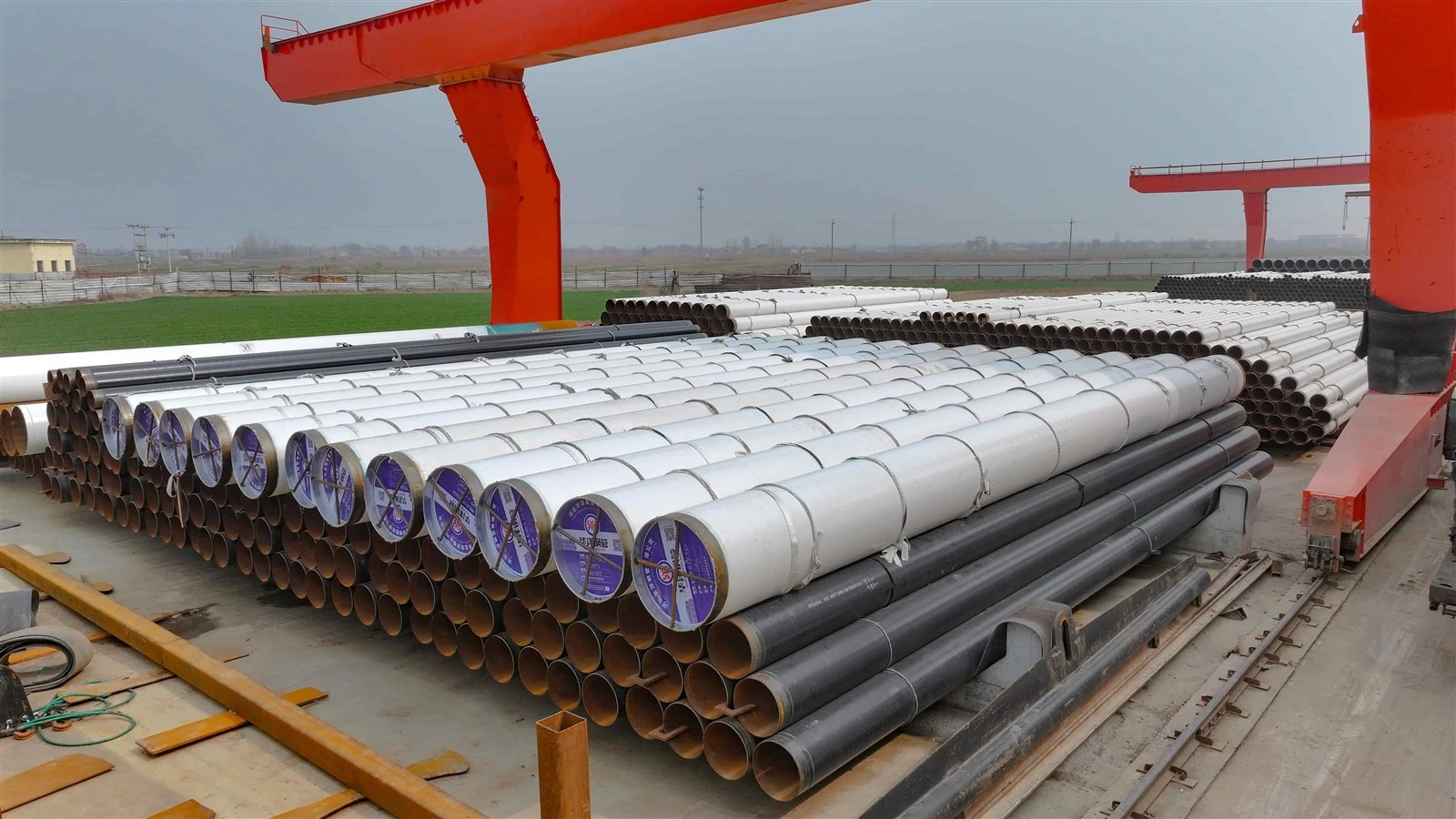
Carbon steel pipes and seamless steel pipes are two of the most widely used piping solutions across industries, from construction and infrastructure to oil and gas and power generation. While the terms are often used interchangeably, they refer to distinct categories of pipes-one defined by material composition and the other by manufacturing method. Carbon steel pipes are categorized by their carbon content, while seamless steel pipes are defined by their joint-free manufacturing process. Understanding the differences between these two pipe types is critical for engineers, procurement teams, and stakeholders to select the right solution for their specific application, ensuring optimal performance, safety, and cost-effectiveness. This article answers key questions about carbon steel pipes vs. seamless steel pipes, breaking down their definitions, manufacturing processes, mechanical properties, applications, and selection criteria to provide a comprehensive comparison.
What Is the Core Definition of Carbon Steel Pipe vs. Seamless Steel Pipe?
The first step in understanding the difference between carbon steel pipes and seamless steel pipes is to clarify their core definitions, as they are categorized by entirely different criteria.
Carbon steel pipes are defined by their material composition: they are made from carbon steel, an alloy of iron and carbon (with carbon content ranging from 0.05% to 1.70%). This material category includes both seamless and welded pipes-meaning a carbon steel pipe can be either seamless or welded, depending on how it is manufactured. Carbon steel pipes are valued for their cost-effectiveness, good strength, and ductility, making them suitable for a wide range of general-purpose applications. They are further classified by carbon content: low-carbon steel (mild steel, 0.05–0.25% carbon), medium-carbon steel (0.25–0.60% carbon), and high-carbon steel (0.60–1.70% carbon), each with varying mechanical properties.
Seamless steel pipes, by contrast, are defined by their manufacturing process: they are crafted from a single solid steel billet, with no weld seams or joints. Unlike carbon steel pipes, seamless pipes are not limited to a single material-they can be made from carbon steel, alloy steel, or stainless steel. The absence of weld seams is their defining feature, eliminating weak points and ensuring uniform strength throughout the pipe. Seamless pipes are available in various material grades and sizes, tailored to critical applications where reliability and pressure resistance are paramount.
The key distinction: carbon steel pipe refers to material, while seamless steel pipe refers to manufacturing method. This means there is overlap-carbon steel seamless pipes exist, as do carbon steel welded pipes, and seamless pipes can be made from non-carbon steels (e.g., stainless steel seamless pipes).
How Do Their Manufacturing Processes Differ?
The manufacturing process is the most significant difference between carbon steel pipes (when welded) and seamless steel pipes, and it directly impacts their strength, durability, and cost. It is important to note that carbon steel pipes can be either seamless or welded, so we focus on the contrast between carbon steel welded pipes (the most common type of carbon steel pipe) and seamless steel pipes (regardless of material).
Carbon steel welded pipe manufacturing is a relatively simple and cost-effective process. It starts with a flat carbon steel plate or coil, which is rolled into a cylindrical shape. The overlapping edges are then welded together using techniques like electric resistance welding (ERW) or submerged arc welding (SAW) to form a seamless-looking cylinder. After welding, the pipe undergoes basic finishing and quality checks. Welded carbon steel pipes have a weld seam along their length, which is a potential weak point if not properly manufactured. This process is ideal for large-volume production, making welded carbon steel pipes more affordable than seamless pipes.
Seamless steel pipe manufacturing is a complex, multi-stage process that requires precision and specialized equipment. It begins with a solid steel billet (which can be carbon steel, alloy steel, or stainless steel) heated to extremely high temperatures (1,100–1,250°C) to make it malleable. The heated billet is then pierced with a mandrel to create a hollow shell, known as a "hollow billet." This shell is then elongated and shaped using rolling mills to achieve the desired outer diameter, inner diameter, and wall thickness. Finally, the pipe undergoes heat treatment, finishing, and rigorous quality control testing. The absence of weld seams means seamless pipes have uniform strength, but the complex manufacturing process makes them more expensive than welded carbon steel pipes.
A key sub-distinction: carbon steel seamless pipes follow the same manufacturing process as other seamless pipes-they are just made from carbon steel billets. This means carbon steel seamless pipes combine the cost-effectiveness of carbon steel with the strength of the seamless manufacturing process.
What Are the Differences in Mechanical Properties?
Mechanical properties-including tensile strength, yield strength, ductility, and pressure resistance-vary significantly between carbon steel welded pipes, carbon steel seamless pipes, and non-carbon seamless pipes (e.g., alloy steel seamless pipes). Understanding these differences is critical for selecting the right pipe for high-pressure or critical applications.
Carbon steel welded pipes have moderate mechanical properties. Low-carbon (mild steel) welded pipes typically have a tensile strength of 350–450 MPa and a yield strength of 240–290 MPa. Their ductility is moderate (15–20% elongation), and they can withstand low to medium pressure (up to 10,000 psi). The weld seam is the weak point, as it may have lower strength than the rest of the pipe and is more prone to corrosion and failure under stress.
Carbon steel seamless pipes have superior mechanical properties compared to welded carbon steel pipes. They have a tensile strength of 450–550 MPa and a yield strength of 290–355 MPa, with higher ductility (20–25% elongation). The seamless structure eliminates the weld seam weak point, allowing them to withstand higher pressure (up to 15,000 psi) and stress. They also have better dimensional accuracy and a smoother surface finish, making them suitable for more demanding applications.
Non-carbon seamless pipes (alloy or stainless steel) have the highest mechanical properties. Alloy steel seamless pipes have a tensile strength of 550–700 MPa and a yield strength of 355–450 MPa, with excellent heat and corrosion resistance. Stainless steel seamless pipes offer superior corrosion resistance and moderate strength, making them ideal for harsh environments. These non-carbon seamless pipes far outperform carbon steel pipes (both welded and seamless) in extreme conditions.
How Do Their Corrosion Resistance and Durability Compare?
Corrosion resistance and durability are key factors for long-term performance, especially in harsh environments, and they differ significantly between carbon steel pipes and seamless pipes (depending on material).
Carbon steel pipes (both welded and seamless) have poor corrosion resistance, as carbon steel is prone to rust and oxidation when exposed to moisture, chemicals, or saltwater. Without protective coatings (e.g., galvanization, paint), carbon steel pipes will degrade over time, especially in corrosive environments like marine or chemical processing. However, their durability is sufficient for dry, low-corrosion environments, and protective coatings can extend their service life. Welded carbon steel pipes are more prone to corrosion at the weld seam, as the welding process can alter the steel's composition and create a more corrosion-prone area.
Seamless pipes made from carbon steel have the same corrosion resistance as welded carbon steel pipes-poor without coatings. However, seamless pipes made from alloy steel or stainless steel offer excellent corrosion resistance. Alloy steel seamless pipes are resistant to high temperatures and moderate corrosion, while stainless steel seamless pipes (containing chromium and nickel) are highly resistant to rust, chemicals, and saltwater. The seamless structure also reduces corrosion risk, as there are no weld seams to trap moisture or contaminants. In terms of durability, seamless pipes (regardless of material) have a longer service life than welded carbon steel pipes, as they are less prone to premature failure from weld seam defects.
What Are the Key Applications for Carbon Steel Pipes vs. Seamless Steel Pipes?
The applications of carbon steel pipes and seamless steel pipes overlap in some areas but are distinct in others, driven by their mechanical properties, corrosion resistance, and cost.
Carbon steel pipe applications are primarily focused on low to medium pressure, non-critical, and cost-sensitive applications. Welded carbon steel pipes are the most common type, used in: - Residential and commercial plumbing (water supply, sewage lines) - Low-pressure fluid transport in industrial settings (e.g., cooling water, compressed air) - Structural applications (columns, beams, scaffolding) - Agricultural irrigation systems - General construction and infrastructure projects
Carbon steel seamless pipes, with their superior strength, are used in slightly more demanding applications, such as: - Medium-pressure industrial fluid transport - Boiler tubes for small to medium power plants - Mid-scale oil and gas gathering lines - Industrial heating systems
Seamless steel pipe applications (including carbon, alloy, and stainless steel) are focused on critical, high-pressure, and harsh-environment applications. Key uses include: - High-pressure oil and gas transmission pipelines (alloy steel seamless pipes) - Power plant steam tubes and superheater tubes (alloy steel seamless pipes) - Chemical processing and refineries (stainless steel and alloy steel seamless pipes) - Aerospace and automotive components (cold-drawn seamless pipes) - Offshore platforms and subsea pipelines (stainless steel seamless pipes) - Medical equipment and precision industrial tools (cold-drawn seamless pipes)
A key takeaway: carbon steel pipes (welded) are ideal for cost-sensitive, non-critical applications, while seamless pipes (especially alloy and stainless steel) are reserved for critical, high-pressure, or harsh-environment uses. Carbon steel seamless pipes bridge the gap, offering better performance than welded carbon steel pipes at a lower cost than alloy or stainless steel seamless pipes.
How Do Cost and Availability Compare Between the Two?
Cost and availability are practical considerations that often drive pipe selection, and there are significant differences between carbon steel pipes and seamless steel pipes.
Carbon steel pipes (welded) are the most cost-effective option, with a lower production cost due to the simpler manufacturing process. They are widely available in a range of sizes and wall thicknesses, with short lead times, making them ideal for large-volume, cost-sensitive projects. Carbon steel seamless pipes are more expensive than welded carbon steel pipes (due to the complex manufacturing process) but cheaper than alloy or stainless steel seamless pipes.
Seamless steel pipes are generally more expensive than carbon steel welded pipes, with the cost varying by material. Carbon steel seamless pipes are the most affordable seamless option, followed by alloy steel seamless pipes, and stainless steel seamless pipes are the most expensive. Seamless pipes also have longer lead times, as their manufacturing process is more complex and time-consuming. However, their durability and reliability can reduce long-term maintenance costs, making them a cost-effective investment for critical applications.
Availability also differs: carbon steel welded pipes are widely available globally, with numerous manufacturers. Seamless pipes (especially alloy and stainless steel) are less widely available, and custom sizes may require longer lead times. Carbon steel seamless pipes are more available than non-carbon seamless pipes but less available than welded carbon steel pipes.
What Factors Should Guide Selection Between Carbon Steel and Seamless Pipes?
Selecting between carbon steel pipes and seamless pipes depends on several key factors, including application requirements, performance needs, cost, and environmental conditions. The following questions can help guide the decision:
1. What is the operating pressure and temperature? High-pressure (above 10,000 psi) or high-temperature (above 300°C) applications require seamless pipes (alloy or carbon steel). Low to medium pressure applications can use welded carbon steel pipes.
2. Is the environment corrosive? Corrosive environments (saltwater, chemicals, acids) require stainless steel or alloy steel seamless pipes. Dry, non-corrosive environments can use carbon steel pipes (welded or seamless).
3. Is the application critical? Critical applications (where failure could be catastrophic, e.g., oil pipelines, power plants) require seamless pipes. Non-critical applications (e.g., residential plumbing) can use welded carbon steel pipes.
4. What is the budget? Cost-sensitive projects should use welded carbon steel pipes. Critical applications may justify the higher cost of seamless pipes (carbon, alloy, or stainless steel).
5. What are the dimensional requirements? Precision applications (e.g., aerospace, medical) require cold-drawn seamless pipes for tight tolerances. General applications can use welded carbon steel pipes with looser tolerances.
Can Carbon Steel Pipes and Seamless Pipes Be Used Together?
In many industrial systems, carbon steel pipes and seamless pipes are used together, leveraging the strengths of each type to optimize performance and cost. For example, a large-scale oil and gas system may use large-diameter alloy steel seamless pipes for high-pressure transmission lines, carbon steel seamless pipes for medium-pressure gathering lines, and welded carbon steel pipes for low-pressure distribution lines. This hybrid approach ensures critical sections have the reliability of seamless pipes, while non-critical sections use cost-effective carbon steel welded pipes.
When using both types together, it is important to ensure compatibility in terms of size, pressure rating, and material. Adapters and fittings may be required to connect different pipe types, and proper corrosion protection should be applied to carbon steel pipes to prevent degradation.
Conclusion
Carbon steel pipes and seamless steel pipes are distinct but overlapping categories-one defined by material, the other by manufacturing method. Carbon steel pipes (primarily welded) are cost-effective, widely available, and suitable for non-critical, low to medium pressure applications. Seamless pipes (available in carbon, alloy, and stainless steel) are more expensive but offer superior strength, pressure resistance, and durability, making them ideal for critical, high-pressure, and harsh-environment applications. The key to selection is understanding the application's requirements: for cost-sensitive, non-critical use, welded carbon steel pipes are the best choice; for critical, high-performance needs, seamless pipes (especially alloy or stainless steel) are essential. Carbon steel seamless pipes offer a middle ground, combining the cost-effectiveness of carbon steel with the strength of the seamless process. By carefully evaluating pressure, temperature, corrosion, cost, and criticality, stakeholders can select the right pipe type to ensure safety, reliability, and cost-effectiveness in any project.


