



How Is Anti-Corrosion Steel Pipe Production Process?
Anti-corrosion steel pipes are composite pipeline materials combining the mechanical strength of steel substrate and the chemical resistance of polymer coatings. Widely adopted in oil & gas transmission, municipal water supply, chemical industry, power plants and water conservancy projects, these pipes can effectively resist soil corrosion, acid and alkali medium erosion, salt fog and microbial degradation, greatly extending the service life of buried or exposed pipeline systems. The final anti-corrosion performance does not only rely on coating materials, but is determined by the whole standardized production workflow, from raw pipe inspection, surface pretreatment, heating and coating, curing and cooling to multi-dimensional quality testing. Every procedure must follow international industry standards to avoid coating peeling, pinholes and insufficient adhesion. Understanding the complete manufacturing flow helps engineering buyers evaluate product quality and select qualified anti-corrosion pipe suppliers.
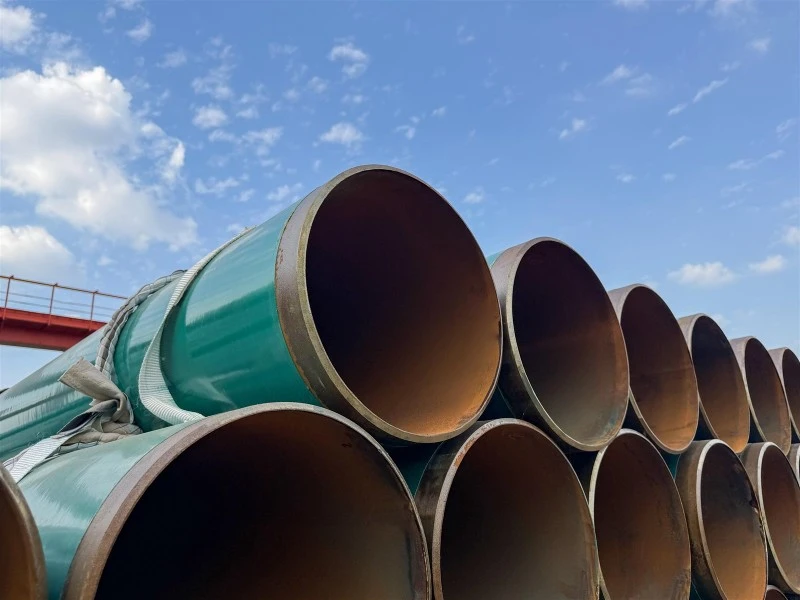
What Is The Raw Pipe Selection And Pre-Inspection Standard?
The base pipe is the foundation of anti-corrosion steel pipe products. Manufacturers usually select ERW straight seam welded pipes, LSAW pipes or seamless steel pipes as substrates according to project pressure, medium and diameter requirements. Before entering the anti-corrosion workshop, all raw steel pipes go through strict pre-inspection. Inspectors check pipe wall thickness, outer diameter, straightness, weld seam integrity and surface defects such as cracks, dents, welding slag and burrs. Any pipes with serious surface damage or unqualified mechanical indicators will be eliminated or repaired in advance. Meanwhile, material certificates are verified to confirm the steel grade meets API 5L, ASTM A53, EN or GB standards. Oil stains, floating dust and loose attachments on the pipe surface are preliminarily removed by high-pressure water washing. This initial screening is critical because hidden defects on the base pipe will be covered by coatings and cause premature pipeline failure after burial. Unqualified raw pipes cannot proceed to subsequent anti-corrosion treatment, which is the first barrier to guarantee finished pipe quality.
Why Is Surface Pretreatment The Most Critical Step Before Coating?
Surface pretreatment directly decides the bonding strength between steel substrate and anti-corrosion coating, and it is widely regarded as the core procedure of the whole anti-corrosion manufacturing process. Even premium coating materials will peel off quickly if the steel surface still retains rust, mill scale, grease or soluble salt. The pretreatment workflow includes degreasing, abrasive blasting and dust cleaning. First, alkaline solvent cleaning removes oil, lubricant and organic contaminants left from pipe forming. Then automatic shot blasting equipment sprays steel grit and steel shot at high speed to strip rust and oxide scale, bringing the steel surface up to Sa 2.5 near-white metal standard, which is the mainstream requirement for buried pipeline anti-corrosion projects. The blasting process also forms controlled anchor profile with roughness between 50μm to 100μm, creating tiny uneven texture for mechanical locking of coating materials. After blasting, residual abrasive particles and fine dust are cleared by compressed air or vacuum cleaning. The treated steel pipe must enter the coating station within limited time. If re-rusting occurs on the surface, re-blasting is mandatory, otherwise blisters and delamination will appear on the finished coating under underground wet environment.
How Is Preheating Operated Before Coating Application?
After surface preparation, steel pipes are transported to the preheating station by roller conveyor. Medium-frequency induction heating system uniformly heats the pipe body to the specified temperature range. The heating temperature is adjusted according to different coating types. For FBE fusion bonded epoxy coating, the substrate temperature needs to reach the designed range to make epoxy powder melt and fuse rapidly once touching the steel surface. Uniform heating is essential; local overheating will degrade coating performance, while insufficient temperature leads to incomplete powder melting and poor adhesion. Temperature sensors are installed along the production line to continuously monitor surface temperature of every pipe segment. Operators adjust the moving speed of the pipe and heating power in real time to eliminate temperature difference between pipe inner wall and outer surface. Pipe ends are properly protected during heating, reserving bare metal sections for field welding at construction sites. Preheating is not simply warming the steel pipe; it creates stable thermal conditions to ensure the coating forms continuous, dense film without bubbles or gaps.
What Are The Main Coating Application Technologies For Anti-Corrosion Steel Pipes?
Different coating systems including single-layer FBE, 2PE and 3PE three-layer polyethylene structure adopt different coating application methods. The 3PE anti-corrosion system is the most widely used for long-distance oil and gas pipelines, composed of three functional layers: bottom FBE epoxy powder layer, middle adhesive copolymer layer and outer polyethylene protective layer. For 3PE processing, electrostatic spraying applies epoxy powder onto the preheated steel pipe first, forming the anti-corrosion primer layer. Immediately afterwards, extruders extrude adhesive and polyethylene materials, wrapping them on the pipe surface by side winding or longitudinal extrusion. For inner wall anti-corrosion of water transmission pipes, internal electrostatic powder spraying is adopted to apply epoxy coating on pipe inner surface, improving smoothness and anti-scaling performance. Single FBE coating mostly uses electrostatic powder spraying, suitable for high-temperature medium and harsh chemical working conditions. Dip coating is occasionally used for small-diameter pipes. During coating application, production line parameters such as powder flow rate, extrusion speed and pipe rotation speed are precisely controlled to guarantee consistent coating thickness around the whole pipe circumference. The coating thickness is monitored online; any section exceeding tolerance will be marked for rework.
How Does Curing And Cooling Secure Coating Integrity?
Once coating materials are applied, the pipe enters the thermal curing stage. Under controlled constant temperature environment, epoxy powder cross-links and cures to form compact chemical bonding with steel substrate. Curing time and temperature must match coating formula. Too short curing time causes incomplete cross-linking, making the coating soft and vulnerable to scratch; excessive high temperature will result in coating brittleness and cracking. After curing, gradual cooling is required instead of sudden quenching. Most production lines use water spray cooling system to lower pipe temperature slowly. Gradual cooling releases internal thermal stress inside the composite coating layer. Rapid temperature drop will create huge stress difference between steel base and polymer coating, triggering tiny invisible cracks which allow water and corrosive ions to penetrate over decades of operation. After cooling, pipe ends are trimmed to clean excess coating and expose steel for on-site welding. Protective caps are installed on pipe ends to prevent damage during stacking and transportation. Curing and cooling is the stage where liquid or powder coating transforms into solid protective film, locking the anti-corrosion structure permanently.
What Quality Inspection Items Are Required For Finished Anti-Corrosion Pipes?
No anti-corrosion steel pipe can leave factory without comprehensive quality inspection. The inspection combines online monitoring and offline laboratory sampling. First, visual inspection checks surface appearance, looking for scratches, bubbles, sagging, pinholes and uneven coating. Coating thickness is measured by coating thickness gauge at multiple positions of each pipe to confirm compliance with design specifications. Holiday detection, also known as high-voltage spark test, is one of the most important non-destructive tests. A high voltage probe scans the whole coating surface. If pinholes or tiny gaps exist, spark discharge will occur to mark defects. Adhesion test and impact resistance test are carried out on sampled pipes. The adhesion test verifies whether the coating can stick firmly without peeling, while impact test simulates mechanical collision during transportation and backfilling construction. In addition, bending test, water absorption test and cathodic disbonding test are conducted in laboratory to evaluate long-term anti-corrosion performance. Pipes failing any test will be sent back for coating removal and re-coating. Qualified products are marked with specification, standard, batch number and production date, then transferred to finished product storage area.
How To Store And Package Anti-Corrosion Steel Pipes After Production?
Proper storage and packaging protect the intact coating from mechanical damage before delivery. Anti-corrosion coating is relatively vulnerable to sharp impact, scratching and long-time ultraviolet exposure. Finished pipes are stacked on padded racks instead of direct contact with hard ground. Rubber spacers are placed between pipe layers to avoid friction scratch. For outdoor temporary storage, shading covering is required to prevent UV aging of polyethylene coating. The stacking height is limited to avoid pipe deformation and coating crushing. Before shipment, pipe end protectors are fixed to guard bare steel ends and coating edges. Bundling straps with soft lining are used for packing instead of metal wires that may cut the coating. During loading and unloading, nylon slings are recommended rather than steel cables. Warehouse management also controls storage environment, reducing humidity and corrosive gas. Even perfect coating from production line can be damaged by improper storage and loading, so this link is also an indispensable part of the whole production system.
Hebei Huayang Steel Pipe Co., Ltd. has built complete integrated production lines for anti-corrosion steel pipes, covering raw pipe manufacturing and in-house anti-corrosion coating workshop. The company can produce 3PE, 2PE, FBE, 2PP and 3PP anti-corrosion steel pipes, with applicable pipe diameter ranging from 219 mm to 1626 mm. The whole manufacturing process strictly follows ISO 21809, DIN 30670, API and domestic GB standards. Every production step including shot blasting pretreatment, medium-frequency heating, automatic coating, curing and non-destructive holiday inspection is monitored by professional quality control team and independent physical & chemical laboratory. With dozens of advanced coating equipment and mature process parameters, Huayang can customize anti-corrosion solutions according to project medium, buried soil condition and temperature requirements. As a manufacturer integrating base pipe forming and anti-corrosion treatment, Hebei Huayang Steel Pipe reduces intermediate links and delivers stable, traceable anti-corrosion steel pipes for global clients in oil & gas, municipal engineering, power and chemical sectors.


